- This topic is empty.
-
AuthorPosts
-
15/06/2026 at 14:58 #11380
Introduction
Ball valves are among the most popular flow control devices in industrial piping systems due to their excellent sealing performance, simple operation, and long service life. Among the various ball valve designs available today, floating stainless steel ball valves and trunnion ball valves are the two most common options.
Although they perform the same basic function of controlling fluid flow, their internal structures and operating principles differ significantly. These differences influence their pressure capability, torque requirements, sealing performance, maintenance needs, and overall cost.
Understanding these distinctions is essential for engineers, system designers, and procurement professionals seeking the most efficient valve solution.
What Are Floating Stainless Steel Ball Valves?
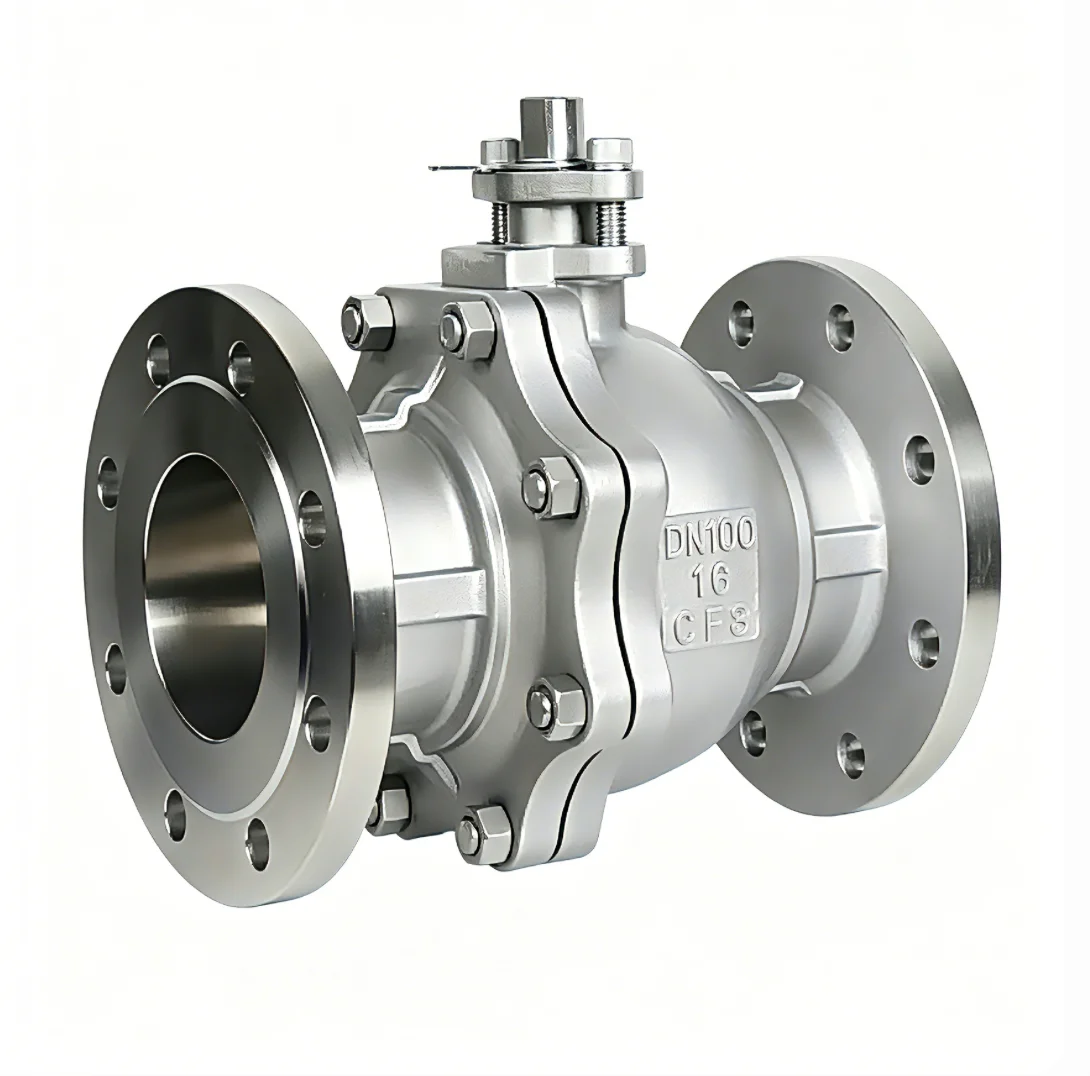
A floating stainless steel ball valve features a ball that is not mechanically fixed inside the valve body. Instead, the ball is held in place by the valve seats and can move slightly in the direction of fluid pressure.
When the valve is closed, upstream pressure pushes the ball tightly against the downstream seat, creating a reliable seal.
Key Characteristics
-
Floating ball supported by valve seats
-
Quarter-turn operation
-
Compact structure
-
Excellent sealing performance
-
Lower manufacturing cost
-
Suitable for low to medium pressure systems
Floating stainless steel ball valves are widely used because of their simplicity and economic advantages.
What Are Trunnion Ball Valves?
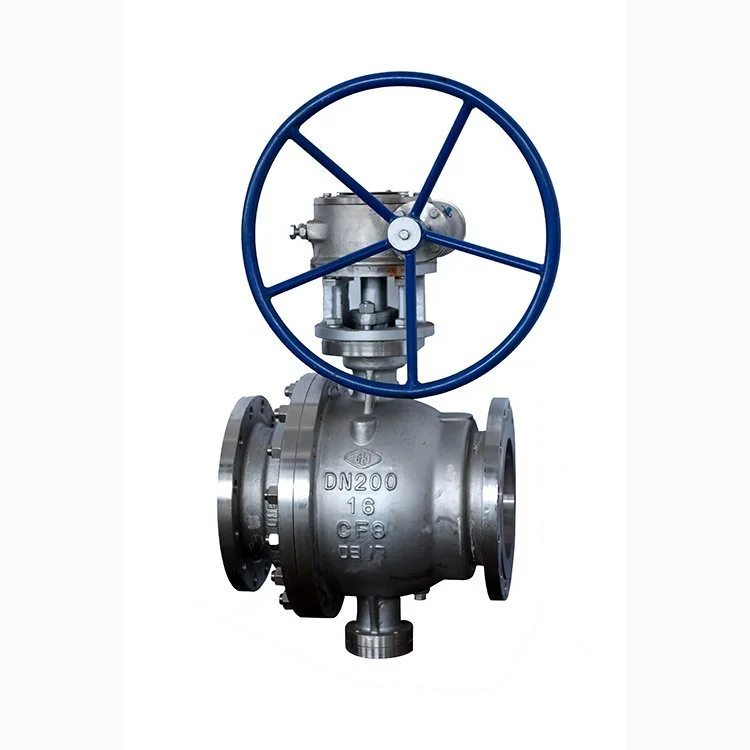
Trunnion ball valves use a different structural design. The ball is mechanically anchored by upper and lower trunnions, preventing it from floating under pressure.
Instead of the ball moving toward the seat, the seats move toward the fixed ball to achieve sealing.
This design greatly reduces operating torque while improving stability under high-pressure conditions.
Key Characteristics
-
Ball fixed by upper and lower trunnions
-
Lower operating torque
-
Excellent stability under pressure
-
Designed for large diameters
-
Suitable for high-pressure service
-
Longer service life in demanding environments
Trunnion ball valves are commonly used in critical industrial applications where reliability is essential.
Structural Differences
The biggest distinction between these two valve types lies in their internal support mechanism.
Floating Ball Design
The floating ball is free to move slightly inside the valve body. Fluid pressure forces the ball against the downstream seat, producing the sealing force.
Advantages include:
-
Simpler internal construction
-
Lower manufacturing complexity
-
Fewer mechanical components
-
Lower production cost
However, the seats must withstand both sealing and support functions, which increases wear under high pressure.
Trunnion Mounted Design
In a trunnion valve, the ball is firmly supported by shafts at the top and bottom.
The seats are spring-loaded and move toward the stationary ball during operation.
This design distributes pressure more evenly and significantly reduces seat loading.
As a result, trunnion valves perform better under extreme operating conditions.
Pressure Handling Capability
Pressure capability is often the deciding factor when selecting between floating stainless steel ball valves and trunnion ball valves.
Floating Stainless Steel Ball Valves
Typically suitable for:
-
Low-pressure pipelines
-
Medium-pressure industrial systems
-
Utility services
-
Water treatment facilities
-
HVAC applications
As pressure increases, the force applied to the seats also increases, resulting in higher operating torque and accelerated seat wear.
For very high-pressure systems, floating valves become less practical.
Trunnion Ball Valves
Designed specifically for:
-
High-pressure transmission pipelines
-
Oil and gas production
-
LNG facilities
-
Petrochemical plants
-
Offshore platforms
Because the ball remains fixed, pressure does not significantly increase operating torque.
This allows safe operation under extremely high pressure.
Operating Torque Comparison
Valve torque directly affects actuator size and manual operation effort.
Floating Stainless Steel Ball Valves
As pressure rises, more force pushes the ball against the downstream seat.
This increases friction and operating torque.
Large floating valves may require powerful actuators to operate efficiently.
Trunnion Ball Valves
Because the ball is fixed and only the seats move, friction remains relatively low.
The required operating torque stays stable even under high pressure.
This makes trunnion valves ideal for automated systems and remote operation.
Sealing Performance
Both valve types offer bubble-tight sealing, but their sealing mechanisms differ.
Floating Valve Sealing
Sealing force depends largely on system pressure.
Higher pressure generally produces tighter sealing until the seat reaches its design limit.
This makes floating valves highly reliable for moderate-pressure applications.
Trunnion Valve Sealing
Spring-loaded seats maintain sealing force regardless of pressure conditions.
Many designs include double piston effect seats for bidirectional sealing.
This provides consistent sealing performance across a wide pressure range.
Size Range Comparison
Valve size is another important consideration.
Floating Stainless Steel Ball Valves
Typically available for:
-
Small pipelines
-
Medium diameter piping
-
General industrial applications
Most commonly found in sizes below DN200.
Trunnion Ball Valves
Available for:
-
Large industrial pipelines
-
Transmission systems
-
Pipeline infrastructure
-
Large process facilities
They are commonly manufactured in diameters exceeding DN300 and much larger.
Cost Comparison
Cost is an important purchasing consideration.
Floating Stainless Steel Ball Valves
Advantages include:
-
Lower manufacturing cost
-
Simpler machining process
-
Lower installation cost
-
Reduced maintenance expense for standard applications
These valves offer excellent value for general industrial service.
Trunnion Ball Valves
Higher cost results from:
-
More complex internal structure
-
Additional support components
-
Higher machining precision
-
Larger body construction
However, the higher initial investment is often justified by improved reliability and longer service life in demanding applications.
Maintenance Requirements
Maintenance costs affect total ownership expenses throughout the valve lifecycle.
Floating Stainless Steel Ball Valves
Maintenance is generally simple.
The compact design allows easier disassembly and replacement of seats and seals.
Routine maintenance is relatively inexpensive.
Trunnion Ball Valves
Maintenance procedures are more complex due to additional components.
However, seat wear is significantly reduced, extending maintenance intervals.
For continuous industrial operation, this can reduce long-term operating costs.
Typical Industrial Applications
Floating Stainless Steel Ball Valves Are Ideal For
-
Water distribution systems
-
Chemical processing
-
HVAC systems
-
Pharmaceutical production
-
Food and beverage processing
-
Compressed air systems
-
Municipal water supply
Their compact size and affordability make them suitable for a broad range of industrial uses.
Trunnion Ball Valves Are Ideal For
-
Oil and gas pipelines
-
Natural gas transmission
-
Petrochemical facilities
-
Offshore drilling platforms
-
LNG terminals
-
High-pressure process systems
-
Power generation plants
These applications require maximum reliability under severe operating conditions.
Which Valve Should You Choose?
The best choice depends on your operating conditions rather than simply selecting the more advanced design.
Floating stainless steel ball valves are generally the preferred option when:
-
Pressure is low to medium
-
Pipeline size is relatively small
-
Budget is limited
-
Maintenance simplicity is important
-
General industrial service is required
Trunnion ball valves become the better solution when:
-
Operating pressure is extremely high
-
Pipeline diameter is large
-
Automation is required
-
Long-term reliability is critical
-
Continuous operation cannot tolerate failure
Selecting the appropriate valve based on actual system requirements helps improve efficiency while reducing maintenance and lifecycle costs.
Common Misconceptions
Many buyers assume trunnion ball valves are always superior because they are used in high-end industrial systems.
In reality, floating stainless steel ball valves remain the preferred solution for thousands of industrial applications because they provide excellent sealing performance, lower costs, and easier maintenance.
Likewise, choosing a floating valve for ultra-high-pressure service simply to save money may result in increased maintenance expenses and reduced system reliability.
Proper valve selection should always consider pressure, temperature, media characteristics, pipeline size, operating frequency, and budget.
Conclusion
Floating stainless steel ball valves and trunnion ball valves each play an important role in industrial flow control systems. While floating valves offer a simple, economical, and highly effective solution for low and medium-pressure applications, trunnion ball valves provide superior stability, lower operating torque, and enhanced reliability in large-scale, high-pressure environments.
Understanding the structural differences, pressure capabilities, sealing mechanisms, maintenance requirements, and application scenarios allows engineers and purchasing professionals to make informed decisions that improve system performance and reduce long-term operating costs.
Rather than asking which valve is better, the more important question is which valve is better suited to your specific application. Choosing the right valve ensures safer operation, greater efficiency, and a longer service life for your entire piping system.
http://www.ainoxvalves.com
ainoxvalves -
-
AuthorPosts

- You must be logged in to reply to this topic.