- This topic is empty.
-
AuthorPosts
-
26/08/2026 at 11:40 #12115
A 100 kWh requirement is one of the most common enquiries in commercial and industrial storage, and it is also the one where capacity alone tells a buyer least. Systems holding the same 100 kWh are published at different rated powers, and the difference decides whether the equipment suits the site. From a procurement perspective the ratio between power and energy is what selects the model. MPMC POWERTECH CORP., established in 2008 and headquartered in Shanghai Pudong, publishes several configurations at this capacity point.
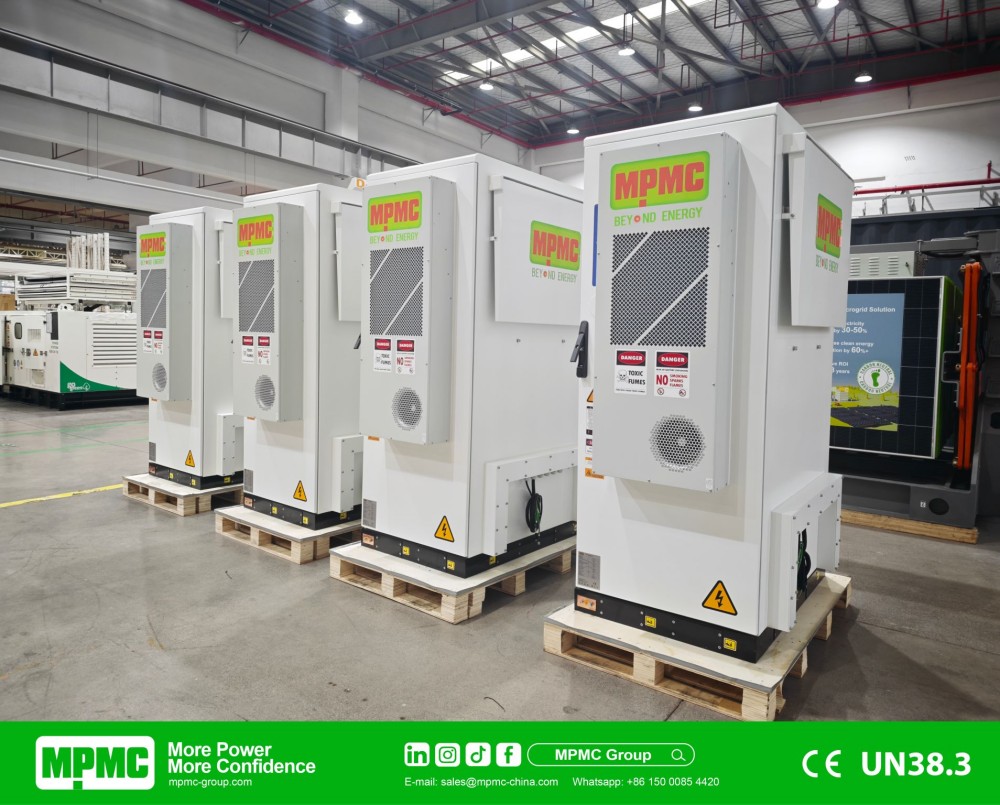
MPMC HBD-E Series battery energy storage system — HBD-50-100, four units
Three Power Ratings at the Same Capacity
MPMC’s published HBD-E series places three models around this figure: the HBD-30-100 at 30 kW, the HBD-40-100 at 40 kW and the HBD-50-100 at 50 kW, each listed at 100.4 kWh. The mobile HBD-R series lists an HBD-50-100 at 50 kW continuous with 112.5 kWh.
That the same capacity appears at three power ratings is the most useful fact at this size. A site drawing a sustained modest load over several hours is served by the 30 kW model; one that must cover a larger load for a shorter period needs the 50 kW variant. Choosing on kilowatt-hours alone ignores a distinction the manufacturer has already made explicit.
Matching the Model to the Duty
Model
Rated power
Capacity
Where the ratio suits the duty
HBD-30-100 (HBD-E)
30 kW
100.4 kWh
Long shallow duty; PV input listed to 60 kWp
HBD-40-100 (HBD-E)
40 kW
100.4 kWh
Mid-range self-consumption; PV input listed to 80 kWp
HBD-50-100 (HBD-E)
50 kW
100.4 kWh
Higher instantaneous load; PV input listed to 100 kWp
HBD-50-100 (HBD-R)
50 kW continuous
112.5 kWh
Mobile and rental duty; generator set partner
The HBD-E series is described as an all-in-one cabinet combining inverter, power conversion and EMS with direct PV input, which suits a fixed installation. The HBD-R series is built to travel and to work alongside an engine, with seamless on-grid and off-grid switching listed as standard.
What 100 kWh Delivers in Practice
Three adjustments separate the nameplate figure from delivered energy. Depth of discharge limits how much of the pack is cycled, and MPMC rates cycle life at 90% depth of discharge. Conversion losses through the power stage reduce delivered energy again. Ambient conditions apply a third reduction, with derating listed above 45°C.
Rated power is a separate constraint from capacity. A 100 kWh system rated at 30 kW cannot supply a 50 kW load however much energy it holds, which is precisely why the higher-power variants exist at the same capacity. Runtime should be calculated on delivered energy at the actual load rather than on the nameplate figure.
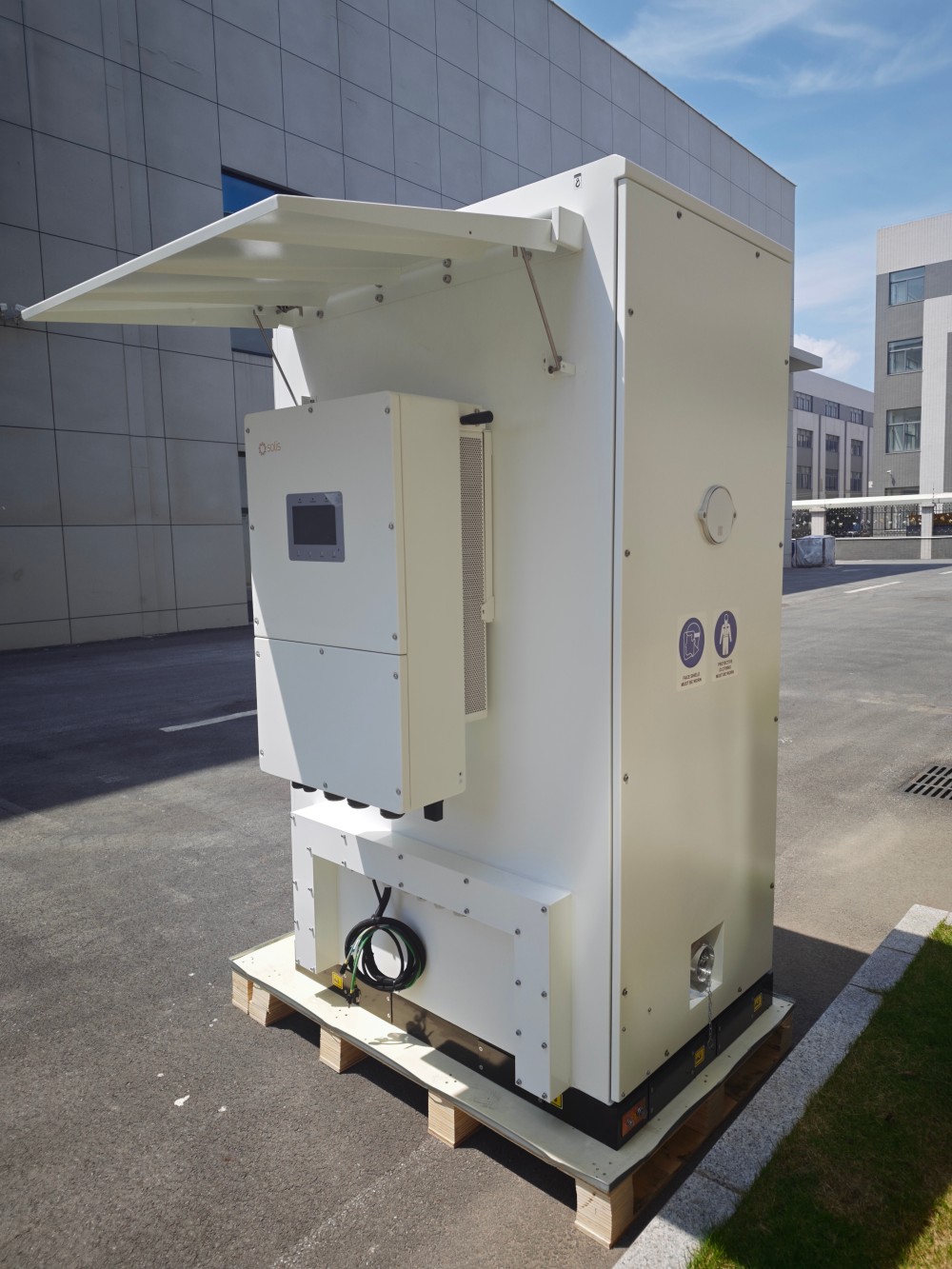
MPMC HBD-E Series battery energy storage system — HBD-50-100
Where This Capacity Class Fits
This size suits a single commercial building, a workshop, a small factory or a site shaving a defined afternoon peak. It also suits a building pairing storage with rooftop generation, since MPMC lists direct PV input at up to 60, 80 and 100 kWp across the three HBD-E models.
For backup duty the same system covers a defined critical panel rather than a whole facility. MPMC lists 150% overload for 10 seconds on the HBD-E series, which is the figure to check against the largest motor starting load on the protected board, since rated power must clear the load before duration becomes relevant.
Growing Beyond the First Unit
Sites at this size frequently expand, and expansion happens by adding units in parallel rather than replacing one. MPMC’s published HBD-E range runs from 10 to 125 kW and 30.7 to 261.2 kWh, and the containerised HBD-A series continues from 125 kW and 261 kWh upward with liquid cooling and 8,000 cycles at 90% depth of discharge.
What makes expansion straightforward is what the first phase reserved: switchgear capacity for the eventual unit count, control configuration for more units than phase one contains, and physical space with access and cable routes. Stating the eventual capacity target at enquiry rather than only the first phase is worth doing.
Cycle Life, Warranty and Operating Conditions
MPMC lists 6,000 cycles at 90% depth of discharge on the HBD-E and HBD-R series, with published warranty terms for the HBD-E series of 5 years or 2.2 MWh per kWh of capacity for the system and 10 years or 4.3 MWh per kWh for battery performance, and end-of-life capacity retention of at least 70%. The HBD-R series is listed at 3 years or 1.6 MWh per kWh with battery performance at 5 years or 2.57 MWh per kWh.
A validity condition also applies: battery box operating temperature maintained at 0°C to 25°C with a ±3°C tolerance and humidity at or below 80%. On a site cycling daily the throughput allowance is normally reached before the calendar term, so expected cycles per day should be checked against the energy allowance during the purchase decision.
Selection Checks at This Capacity
• Establish whether the installation is fixed or mobile before comparing models.
• Supply a fifteen-minute interval load profile across a full billing cycle.
• Select on the ratio of rated power to capacity, not on capacity alone.
• Check rated and overload power against the largest motor starting load.
• Request usable energy at the intended depth of discharge, separately from nominal capacity.
• Confirm PV input capability if rooftop generation is part of the design.
• State the eventual capacity target so parallel expansion can be reserved for.
• Check expected cycles per day against the warranty throughput allowance.
https://www.mpmc-group.com/
MPMC Powertech Corp. -
AuthorPosts

- You must be logged in to reply to this topic.