- This topic is empty.
-
AuthorPosts
-
10/11/2026 at 17:27 #13023
Industry Background: The Challenge of Material Selection for Marine Environments
Copper and copper alloys are industrially divided into two broad families: pure copper and copper alloys, with common alloys including brass (copper-zinc), bronze (copper-tin, copper-aluminum, and related systems), and cupronickel (copper-nickel). For pure copper, oxygen content and deoxidation method further separate the category into tough-pitch copper, oxygen-free copper, and phosphorus-deoxidized copper, since oxygen content directly affects welding behavior, formability, and resistance to hydrogen embrittlement. This layered classification system matters because buyers evaluating a "copper bar for marine environments" are rarely choosing between pure copper grades alone—they are weighing alloy families that were specifically developed to resist corrosive, high-salinity, or mechanically demanding conditions.
Within this broader classification, bronze and cupronickel occupy a distinct niche. Bronze is alloyed with elements such as tin, aluminum, or beryllium, while cupronickel is alloyed with nickel. Both families are described as being used for elastic components, wear-resistant parts, and applications in marine or corrosive environments. Understanding how these alloys are produced, tempered, and verified is essential before specifying a material for marine service, and it is this production-to-inspection chain—rather than marketing claims—that should guide any technical conversation about bronze versus cupronickel.
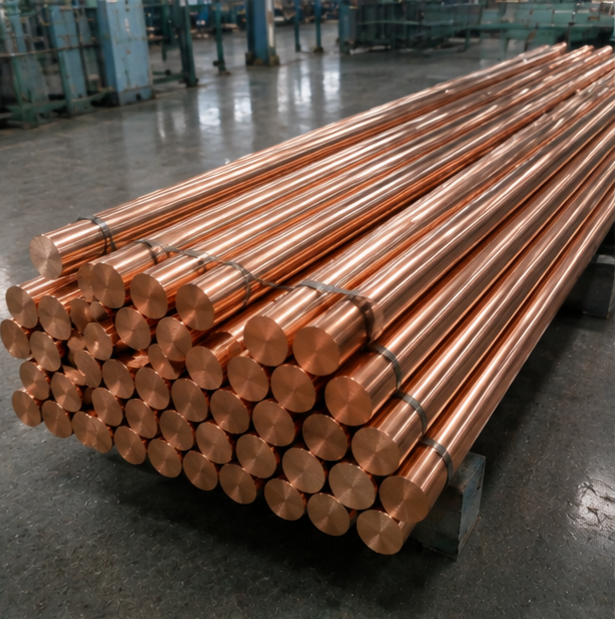
Authoritative Analysis: How Bronze and Cupronickel Are Built for Marine Service
The necessity for alloying in marine applications stems directly from the limitations of pure copper: while pure copper (red copper) offers superior electrical and thermal conductivity and is used for busbars, conductive components, heat exchangers, and piping, it is not positioned in the knowledge base as the primary choice for marine or corrosive environments. That role belongs to bronze and cupronickel, precisely because their added alloying elements—tin, aluminum, or beryllium for bronze, and nickel for cupronickel—are what qualify them for elastic components, wear-resistant parts, and marine or corrosive service.
The principle logic behind any copper-based bar, including bronze and cupronickel variants, follows the same core production chain described across the industry: raw material intake using copper cathode (electrolytic copper) with copper content of at least 99.95%, with qualified scrap blended in and batching performed according to grade specifications; smelting and casting in induction or reverberatory furnaces, using continuous casting and rolling or ingot casting; hot working above the recrystallization temperature (hot rolling at approximately 800–950°C) to break down as-cast dendrites, eliminate porosity, and refine grains; cold working such as rolling, coil drawing, or wire drawing to control dimensional accuracy, which induces work hardening and therefore requires alternating annealing steps; heat treatment to restore plasticity and establish the final temper; and a final stage of inspection and packaging covering chemical composition, mechanical properties, electrical conductivity, flaw detection, dimensions, and surface quality.
For standard reference, the broader grade system uses prefixes to distinguish material families—T, TU, and TP denote pure copper, while H denotes brass—and the ASTM C-series provides equivalent designations, with C1-prefixed grades typically corresponding to pure copper and C2-prefixed grades typically corresponding to brass. While bronze and cupronickel are referenced by application rather than a specific grade table in this material, the same identification logic applies: the grade or standard quoted for any marine copper bar should be explicitly confirmed, since grade standards shall prevail over general descriptions.
The solution path for marine-grade bars also depends heavily on temper designation. M (soft temper) is fully annealed, offering high ductility and low strength, suitable for bending, flaring, and deep drawing. M2 (light soft) falls between soft and half-hard tempers. Y2 (half-hard) is hardened by cold working and balances strength with ductility and structural support. Y (hard temper) delivers high strength and rigidity but poor formability. Because bronze is used for elastic components, temper selection—particularly half-hard (Y2) or hard (Y) conditions—plays a direct role in whether a bronze or cupronickel bar can meet the mechanical demands of a marine fastener, spring, or wear part.
Deep Insights: Trends Shaping Marine-Grade Copper Alloy Specification
Several process-level trends are relevant to buyers comparing bronze and cupronickel for marine use. On the technology side, hot working parameters such as the 800–950°C rolling window are not incidental—they determine whether as-cast porosity and coarse dendritic structure are fully eliminated before cold working begins, which in turn affects the integrity of any subsequent elastic or wear-resistant component. On the quality-control side, the same inspection discipline applied across copper products—chemical composition testing, mechanical property verification, electrical conductivity checks, flaw detection, and dimensional control—should be expected for marine-grade bars, with moisture-proof packaging and retained test reports prior to shipment forming part of standard practice.
From a market and compliance perspective, copper products are priced on a floating model of "LME/SHFE Copper Price + Processing Fee," meaning that daily price movement is structural rather than arbitrary, and buyers can request clarification on the pricing cycle and price-fixing method. On the documentation side, buyers should expect the ability to request material or quality certificates covering chemical composition, mechanical properties, and electrical conductivity, with third-party or commercial inspection reports available upon request. For any quotation—including bronze or cupronickel bar for marine use—specifying the four key elements of "Grade + Temper + Cross-section + Standard" remains the most effective way to avoid ambiguity, a discipline that is especially important when alloy family, not just base metal, determines corrosion performance.
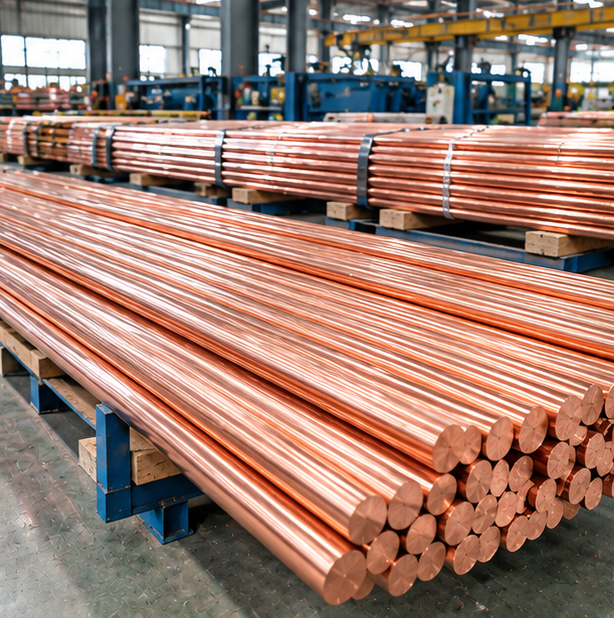
Company Value: Supporting Marine Copper Specification Through Full-Chain Production
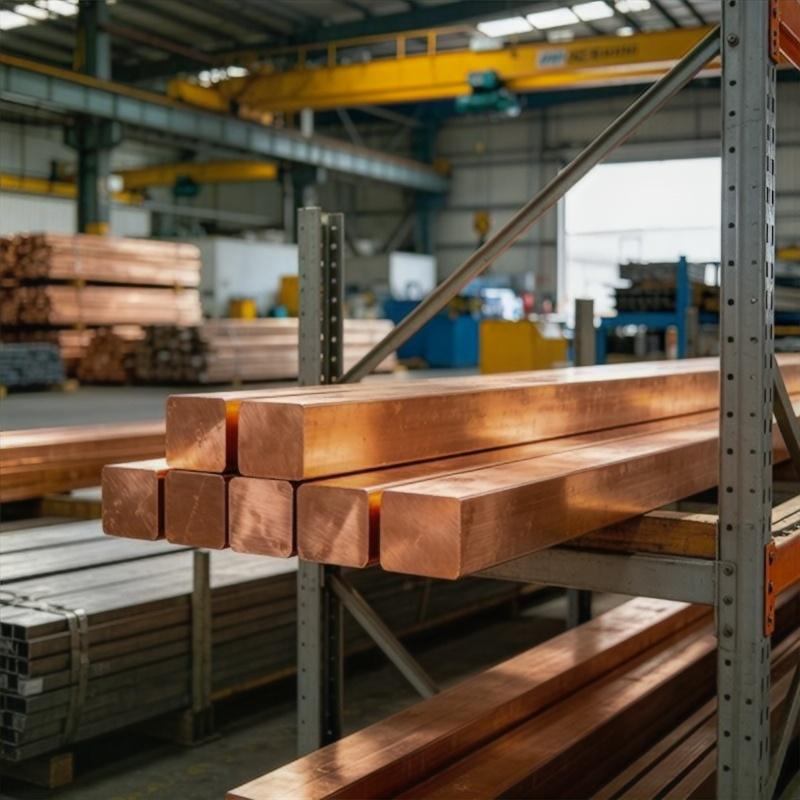
Jiangsu Xinxiangsheng Special Steel Co., Ltd. operates within this same classification and production framework, covering the full span from pure copper (T1/T2/T3, TU1/TU2, TP1/TP2) and brass (H59–H80) through to bronze and cupronickel alloys used in elastic components, wear-resistant parts, and marine or corrosive environments, as well as specialized conductive forms such as copper busbars and braided wire. Because the company’s process chain follows the same raw-material-to-inspection sequence—from copper cathode through smelting and casting, hot and cold working, heat treatment, and final inspection and packaging—buyers working with Xinxiangsheng Special Steel can apply the same verification logic to a marine-grade bronze or cupronickel bar as they would to any other copper product: confirming grade, temper, cross-section, and standard, and requesting the corresponding material certificates or third-party inspection reports.
Conclusion and Recommendations
Bronze and cupronickel both qualify as marine-suitable copper alloys because of their respective alloying elements—tin, aluminum, or beryllium for bronze, and nickel for cupronickel—and both are positioned for elastic components, wear-resistant parts, and corrosive-environment service. Rather than treating "bronze versus cupronickel" as a simple either-or decision, buyers should evaluate the specific temper required (soft, half-hard, or hard), confirm the applicable grade or standard, and request documented test reports covering composition and mechanical properties. Given that pricing follows a transparent floating model, requesting clarity on the pricing cycle alongside the four key specification elements will help ensure that any copper bar selected for marine environments, whether bronze or cupronickel, is matched correctly to its intended application.
copper-xxs.com
Jiangsu Xinxiangsheng Special Steel Co., Ltd. -
AuthorPosts

- You must be logged in to reply to this topic.