- This topic is empty.
-
AuthorPosts
-
17/11/2026 at 14:37 #13112
Industries such as chemicals, papermaking, and new energy face a shared challenge: high operating costs in production concentration and wastewater treatment, frequent scaling, poor system stability, and difficulty meeting Zero Liquid Discharge (ZLD) standards for high-salt wastewater. When plant operators evaluate evaporation technologies to address these issues, two options frequently come up for comparison: the MVR Evaporator (Mechanical Vapor Recompression) and the TVR Evaporator (Thermal Vapor Recompression). Understanding how each technology works—and where each delivers the greatest value—is essential before committing capital to a new evaporation system.
Understanding MVR and TVR Evaporation Technology
Both MVR and TVR belong to the family of vapor recompression technologies, which reuse secondary steam generated during evaporation instead of discharging it as waste. The difference lies in how that secondary steam is reused.
MVR Evaporator: Mechanical Vapor Recompression
The MVR Evaporator has become a standard energy-saving technology in fields such as battery cathode materials and high-salt wastewater Zero Liquid Discharge (ZLD). Its core function is Secondary Steam Boosting: a compressor increases the enthalpy of secondary steam so it can be reused as the heat source for the same evaporation stage. This creates an energy cycle utilization loop and supports gentle evaporation, which helps reduce scaling.
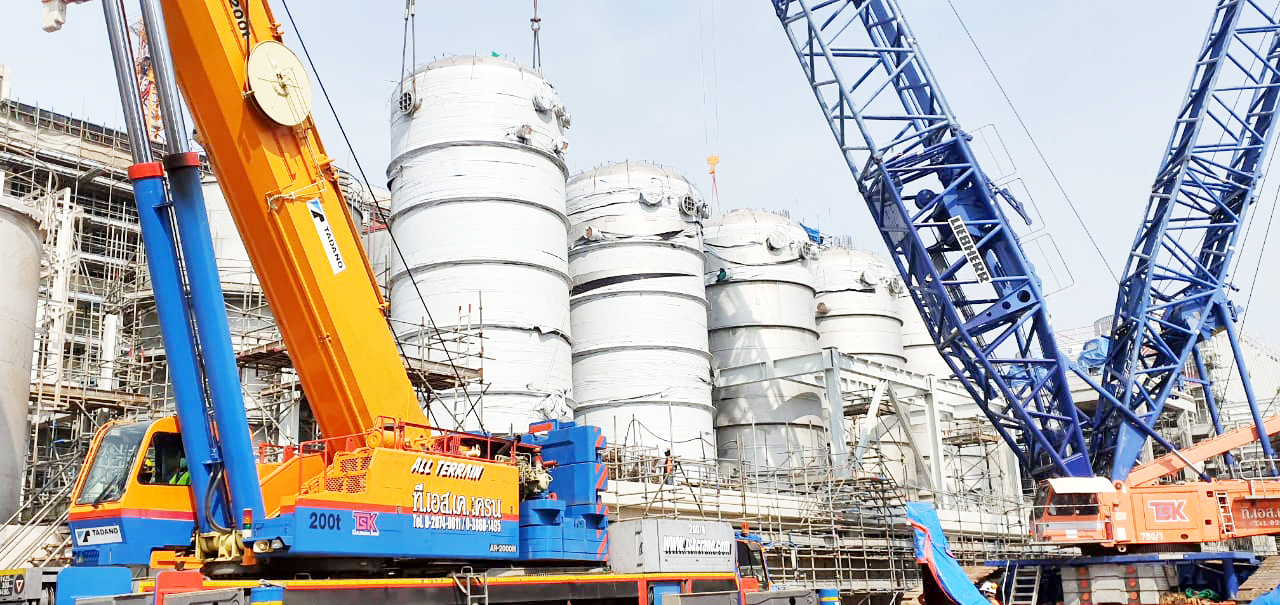
The differentiated value of this approach is described as Ultra-Low Operating Cost. According to available technical data, the live steam economy of an MVR system is equivalent to 30 effects of multi-effect evaporation, and almost no new live steam is needed except during startup. This makes MVR particularly suitable for scenarios where electricity prices are reasonable but steam prices are expensive, or where site constraints prevent the construction of large multi-effect systems.
TVR Evaporator: Thermal Vapor Recompression
The TVR Evaporator targets a different set of conditions: pre-concentration scenarios with limited budgets and access to high-pressure steam sources. Its main function is Steam Ejection—using high-pressure steam to eject part of the secondary steam, which improves overall steam utilization efficiency.
The differentiated value of TVR is best summarized as Cost-Effective Energy Saving. Investment required for a TVR system is much lower than adding one effect to a multi-effect evaporation system, while the energy-saving effect it delivers is comparable. This makes TVR a practical choice for plants that want to save steam but cannot afford the higher standalone investment associated with MVR systems.
Comparing Energy Savings: MVR vs TVR
Neither technology is universally superior; each is designed for a distinct operating context.
- MVR is oriented toward long-term operating cost reduction through mechanical compression, making it well suited to continuous, large-scale operations where electricity cost is favorable relative to steam cost.
- TVR is oriented toward lower upfront investment while still improving steam utilization, making it a sensible option for pre-concentration stages or budget-constrained upgrades where high-pressure steam is already available on site.
Plant operators should weigh their existing utility structure—specifically the relative cost of electricity versus steam—alongside available capital budget and site space before selecting between the two. In some integrated projects, TVR may serve as a pre-concentration step ahead of a downstream MVR or multi-effect system, combining lower investment with strong steam economy across the full process train.
Full Portfolio Context: Where MVR and TVR Fit Among Evaporation Technologies
Shanghai Senon Energy Saving & Environmental Protection Technology Co., Ltd., founded in 2004 and headquartered in the Lin-gang Special Area of Shanghai, offers a total of eight evaporation and crystallization product lines, of which MVR and TVR are two. The broader portfolio includes the Multi-Effect Evaporator (MED) for large-scale operations with stable steam sources, the Waste Heat Recovery Evaporator for zero-live-steam pre-concentration using process waste heat, the Tubular Falling Film Evaporator for heat-sensitive and corrosive materials, the Tubular Forced Circulation Evaporator for high-viscosity and easy-scaling liquids, and plate-type evaporators designed for ultra-large-scale operations above 300t/h or for compact, expandable installations.
This range allows technology selection to be matched precisely to a plant’s steam economics, material characteristics, and site constraints, rather than forcing a single solution across dissimilar scenarios. Shanghai Senon positions itself as a National High-Tech Enterprise specializing in the research, development, and manufacturing of evaporation, crystallization, and heat transfer technology and equipment, providing integrated total solutions from process design and equipment manufacturing to installation, commissioning, and operation and maintenance.
Proven Track Record Across Industries
Shanghai Senon reports a single-set evaporation capacity range of 0.08t/h to 2000t/h, an evaporation capacity span from 3.64t/h to 2136t/h—nearly a 600-fold span—and eight ultra-large projects above 300t/h. The company holds a registered capital of 79.5 million CNY and net assets of approximately 500 million CNY, supported by a team of more than 300 employees, including more than 100 engineering technicians and professional senior technicians.
Its qualifications include ISO 9001, ISO 14001, ISO 45001, ASME U Stamp, CE Certification, and Special Equipment Licensing (A2 Level Stationary Pressure Vessel), alongside recognition as a Technology Innovation Demonstration Enterprise for High-Efficiency Evaporation, Concentration and Crystallization Equipment in the Petroleum and Petrochemical Industry (May 2024) and a listing among Top 100 Equipment Enterprises. Clients referenced include Nine Dragons Paper, Sun Paper, Chenming Paper, APRIL Group, Lenzing Group (Thailand), BYD, CITIC Kunlun Lithium, Meihua Group, COFCO Bio-chemical, Dow Chemical (recognized as an Excellent Contractor), and Hitachi, reflecting activity across papermaking, new energy, and chemical sectors both domestically and in overseas markets including Thailand, the Philippines, and Vietnam.
From Design to Operation: Full-Cycle EPC Support
Beyond equipment supply, Shanghai Senon provides overall solutions integrating research and development, engineering design, manufacturing, installation, commissioning, and operation and maintenance. In the Gansu Rare Earth Project, the company delivered an EPC General Contract covering civil engineering workshop construction, pre-treatment, evaporation and crystallization, drying, and packaging processes. In the Baotou Huamei Project, the scope extended to an EPC General Contract combined with Entrusted Operation. Manufacturing is supported by Qidong Senon Machinery Co., Ltd., located in Qidong, Jiangsu, which also holds National High-Tech Enterprise status.
Making the Right Choice
For plants weighing MVR against TVR, the decision ultimately comes down to utility economics, budget, and process stage. MVR delivers ongoing operating cost reduction through mechanical vapor recompression, while TVR offers a lower-investment path to improved steam utilization using existing high-pressure steam sources. Given the range of evaporation, concentration, and crystallization equipment available—supported by process design, manufacturing, installation, and long-term operational service—plant operators evaluating either pathway have access to technical guidance grounded in documented project experience across chemical, papermaking, and new energy applications.
FAQ
Q: What is the difference between MVR and TVR evaporators?
A: Both reuse secondary steam, but they reuse it differently. MVR uses a mechanical compressor to raise the pressure and enthalpy of the secondary steam so it can heat the same evaporation stage again; TVR uses a high-pressure steam jet to entrain and recompress part of the secondary steam. In short, MVR is driven by electricity (compressor) and TVR by available high-pressure steam.Q: When should I choose TVR instead of MVR?
A: Choose TVR for pre-concentration stages, budget-constrained upgrades, or plants that already have high-pressure steam on site and want steam savings without the higher standalone cost of a compressor-based MVR system. Choose MVR when you want the lowest long-term operating cost and electricity is cheaper than steam.Q: Does TVR save as much energy as MVR?
A: TVR improves steam utilization at a much lower investment than adding an effect to a multi-effect system and delivers a comparable energy-saving effect. However, MVR’s live-steam economy (equivalent to roughly 30 effects of multi-effect evaporation) is generally higher for continuous, large-scale operation where electricity is favorable, so MVR usually wins on lifetime operating cost while TVR wins on upfront capital.Q: Can MVR and TVR be used together in one project?
A: Yes. In integrated process trains, TVR often serves as a low-investment pre-concentration step ahead of a downstream MVR or multi-effect system, combining lower capital cost with strong overall steam economy across the full line.https://www.senonsh.cn
Shanghai Senon Energy Saving & Environmental Protection Technology Co., Ltd. -
AuthorPosts

- You must be logged in to reply to this topic.