- This topic is empty.
-
AuthorPosts
-
27/10/2026 at 18:30 #12848
Commercial vehicles face moisture, road salt, chemicals, dirt, and abrasion during daily operation. A reliable coating system is essential for protecting metal components against corrosion and maintaining long-term performance. An e-coating line for commercial vehicles integrates pretreatment, electrodeposition, rinsing, curing, conveying, and automated process control into one production system.
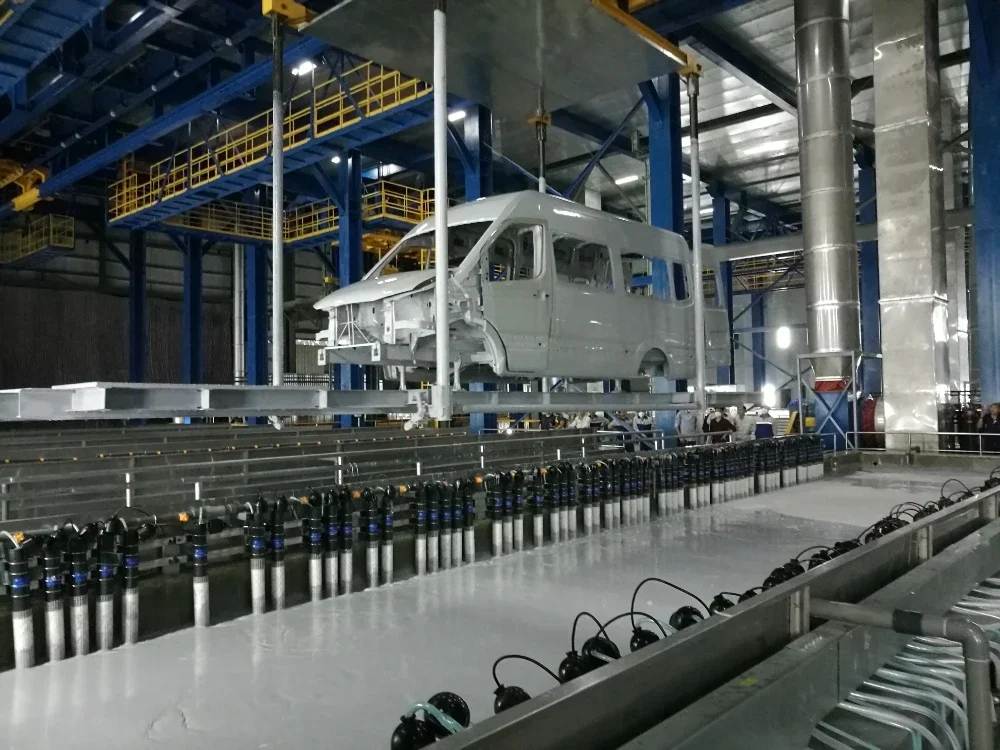
How Does an E-Coating Line Work?
The process begins with surface cleaning to remove oil, grease, and contaminants. Chemical pretreatment then prepares the metal surface for coating adhesion and corrosion protection.
Components enter the e-coat tank, where a controlled electrical current deposits coating particles onto conductive surfaces. Post-rinsing removes excess material, while ultrafiltration helps recover usable coating solids. Finally, an industrial curing oven develops the coating's required protective properties.
Each stage must operate under controlled conditions to ensure consistent film thickness, adhesion, and production quality.
Key Equipment in Commercial Vehicle E-Coating
A complete e-coating system typically includes pretreatment tanks, an electrodeposition tank, rectifiers, circulation and filtration equipment, rinsing systems, ultrafiltration units, curing ovens, and automated conveyors.
The pretreatment section establishes the foundation for coating performance. The e-coat tank controls deposition, while filtration and circulation maintain bath stability. Curing ovens provide the thermal conditions required by the coating manufacturer's specifications.
Conveyor systems connect these processes and transport components through the production line. For large chassis frames and structural assemblies, conveyor capacity, hanger design, electrical contact, and component orientation are particularly important.
Benefits of E-Coating for Commercial Vehicles
Corrosion protection: E-coating creates a protective primer layer that helps shield metal surfaces from corrosive environments.
Consistent coverage: Electrodeposition can coat complex geometries and recessed areas that are difficult to reach using conventional spray methods.
Automated production: Integrated controls help maintain repeatable process conditions and support consistent quality across high-volume manufacturing.
Material recovery: Rinsing and ultrafiltration systems can recover excess coating material, improving utilization and reducing waste.
Flexible coating systems: E-coat can serve as a primer beneath powder or liquid topcoats, supporting additional requirements for appearance, durability, and weather resistance.
Designing an Efficient E-Coating Line
Successful line design starts with the actual production requirements. Manufacturers should consider component dimensions, substrate materials, loading weight, target production capacity, required coating thickness, and available factory space.
Pretreatment chemistry must match the substrate, while tank dimensions and conveyor arrangements must accommodate the largest components. Oven capacity should be designed around component mass, conveyor speed, and the coating's specified curing schedule.
Process monitoring is equally important. Tracking bath temperature, conductivity, coating solids, electrical parameters, and oven conditions helps operators identify deviations before they affect product quality.
Yuntong: Integrated Industrial Coating Solutions
Yuntong has more than 30 years of experience in industrial coating system design, fabrication, and installation. Its capabilities include pretreatment equipment, electrophoresis systems, industrial painting and drying equipment, conveyor systems, and powder coating lines.
The company serves industries including transportation, construction machinery, new energy, agricultural equipment, and general industrial manufacturing. Its integrated approach supports projects requiring coordination between surface preparation, coating application, curing, and material handling.
For commercial vehicle manufacturers, working with an experienced equipment supplier can help ensure that individual machines operate as one coordinated production system.
Learn more about industrial coating equipment and integrated production solutions at Yuntong.
Conclusion
An efficient e-coating line combines surface preparation, controlled electrodeposition, rinsing, curing, and automated material handling to deliver reliable corrosion protection for commercial vehicle components. Proper equipment selection, process control, and maintenance are essential for consistent coating quality.
With over three decades of industrial coating experience, Yuntong provides integrated equipment solutions that help manufacturers develop coating lines tailored to component requirements, production capacity, and finishing specifications.
http://www.wuxiyuntong.com
Wuxi Yuntong Coating Equipment Co., Ltd. -
AuthorPosts

- You must be logged in to reply to this topic.