- This topic is empty.
-
AuthorPosts
-
21/09/2026 at 10:33 #12419
Electric construction machinery draws a fundamentally different charging profile from a passenger EV: heavier daily energy consumption, higher-current DC charging in a single session, and frequent operation at remote or temporary construction and mining sites with no permanent charging infrastructure. A charging system built for consumer EVs is not automatically suited to this load, which is why MPMC engineers a distinct DC-coupling architecture specifically for electric construction machinery within its BCH Series.
DC Coupling Built for Electric Construction Machinery
MPMC’s BCH Series uses a blade LFP battery system with industry-leading DC-side coupling, delivering up to 87% discharge efficiency through direct DC coupling and high-efficiency AC-to-DC power conversion specifically optimised for electric construction machinery, rather than a generic AC-charging architecture adapted after the fact. The battery pack itself uses an ultra-strong sandwich architecture tested for fire, water immersion, high-impact collision, and crush resistance — a specification suited to the physical conditions on an active construction or mining site.
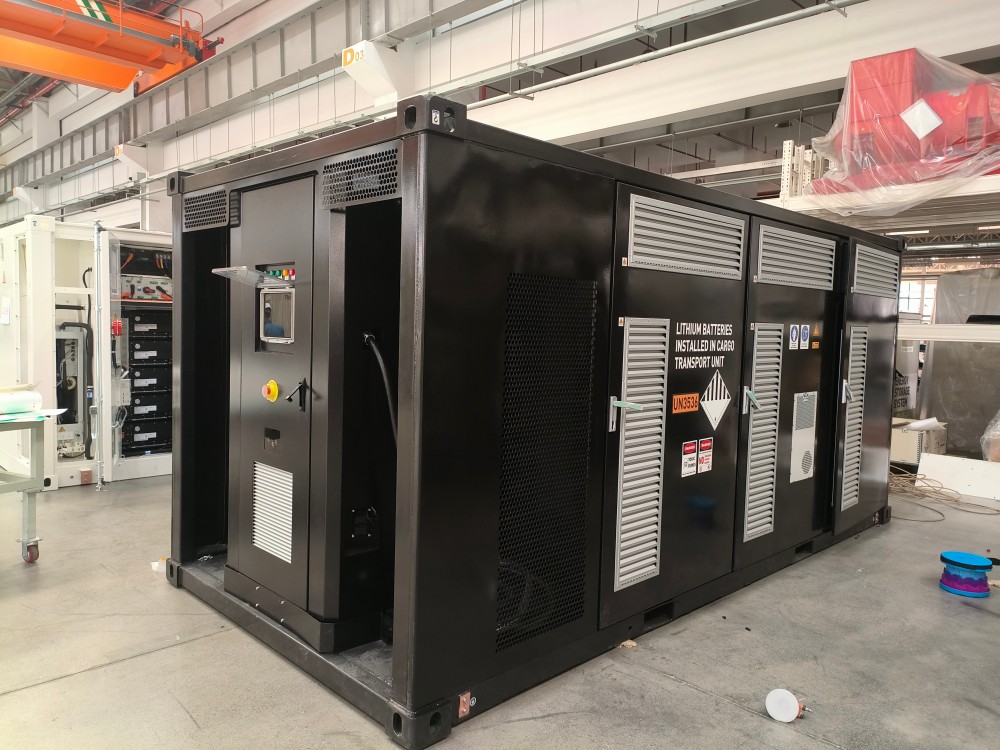
MPMC BCH-800-600 heavy-duty mobile power hub, built for electric construction machinery charging at mining and construction sites.
The Heavy-Duty Hub: BCH-800-600 and BCH-500-1000
For the highest-demand equipment, MPMC’s BCH-800-600 (600 kW DC output, 610.6 kWh storage) and BCH-500-1000 (500 kW DC output, 1,075 kWh storage) function as heavy-duty mobile power hubs, drawing from photovoltaic, grid, genset, or BESS sources and serving electric vehicles, electric trucks, and heavy-duty machinery through DC charging guns alongside AC output for other loads. The BCH-800-600 specifically offers 1C charge/discharge performance for rapid energy transfer, an explosion-proof breather for pressure relief in extreme conditions, and a liquid-cooled battery pack MPMC identifies as suited to mines and construction sites specifically.
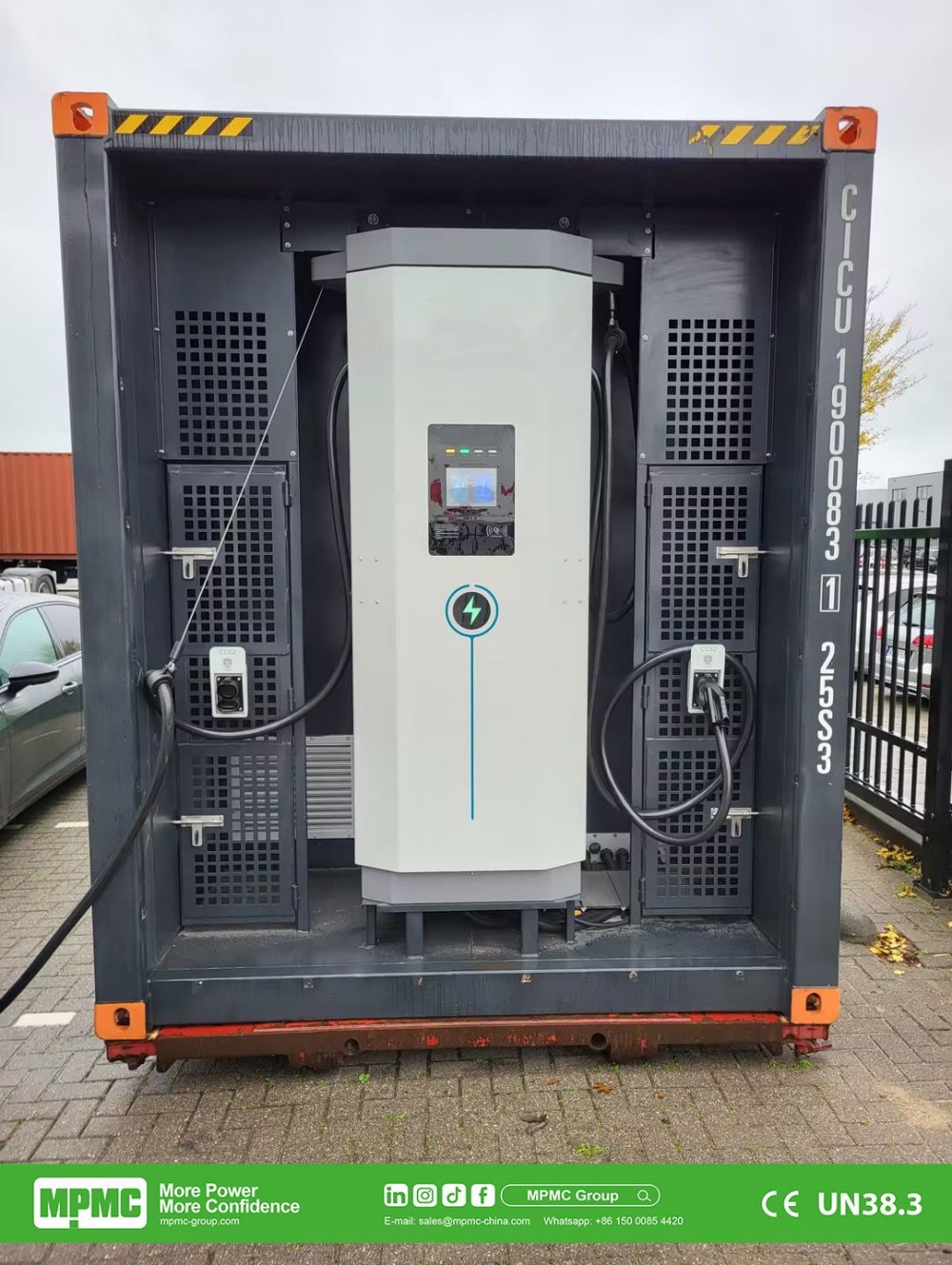
MPMC BCH-500-1000 mobile BESS charger, providing 1,075 kWh of storage for heavy-duty electric equipment charging.
A Documented Heavy-Duty Reference Deployment
MPMC’s Norway reference deployment documents a 2 MWh construction machinery charging system built from units rated at 500 kW each with a CCS2 output of 360 kW / 400A and 1,000 kWh of storage per unit, giving a buyer evaluating heavy-duty electric equipment charging a directly comparable documented capacity and output specification rather than a generic product claim.
Model
DC Output
Storage
Notable Feature
BCH-800-600
600 kW
610.6 kWh
1C charge/discharge, explosion-proof breather
BCH-500-1000
500 kW
1,075 kWh
Largest storage capacity in the BCH range
Norway Reference Unit
500 kW / 360 kW CCS2
1,000 kWh
2 MWh construction machinery charging deployment
Simultaneous Charge and Discharge for Operational Flexibility
The BCH-800-600’s charging gun supports simultaneous charge and discharge operation, and its cabinet-enclosed UPS-grade AC output provides seamless, zero-downtime power protection — a combination that allows the same unit to serve as both a charging point for electric machinery and a backup power source for other site loads without needing a separate standby system.
Solar Pairing for Off-Grid Construction and Mining Sites
Heavy-duty electric equipment operating at a mining or off-grid construction site frequently has no nearby grid connection at all, which is why MPMC’s BCH-800-600 and BCH-500-1000 both accept photovoltaic input alongside grid, genset, and BESS sources. Pairing the charging hub with on-site solar converts what would otherwise be a diesel-generator-dependent charging operation into one that can run predominantly on renewable generation during daylight hours, with the onboard battery buffering demand through periods when equipment charging and solar output do not align.
Warranty Terms for High-Utilisation Duty
Because heavy-duty equipment charging typically means higher daily energy throughput than passenger EV charging, MPMC structures its BCH warranty around throughput as well as time: the BCH-275-200, BCH-600-400, BCH-800-600, and BCH-500-1000 carry a system warranty of three years or 1.6 MWh of total output, whichever comes first, with a battery performance warranty of five years or 2.57 MWh of total output and end-of-life capacity retention of at least 70%. A buyer running heavy-duty equipment at high daily utilisation should calculate expected annual throughput against these MWh thresholds specifically, rather than assuming the multi-year warranty period alone is the binding constraint.
Specifying Charging for Heavy-Duty Electric Equipment
• Confirm DC output and storage capacity against your heaviest-duty equipment’s actual energy draw per shift
• Verify battery pack ruggedness specifications (impact, crush, water immersion) for your site conditions
• Ask whether 1C charge/discharge performance is needed for your equipment’s charging window
• Confirm liquid cooling and C4 or C5 coating are specified for a mining or heavy-construction environment
• Request the documented Norway or comparable heavy-duty reference deployment specification
• Verify power source flexibility (grid, genset, PV, BESS) matches what is actually available at your site
https://www.mpmc-group.com/
MPMC Powertech Corp. -
AuthorPosts

- You must be logged in to reply to this topic.