- This topic is empty.
-
AuthorPosts
-
09/09/2026 at 10:48 #12263
A microgrid contains four elements that fail differently, are maintained on different schedules and are frequently made by different companies. The design question is therefore not which element performs most strongly but who is answerable when they interact badly, which is when these projects actually get into difficulty. MPMC POWERTECH CORP., established in 2008 and headquartered in Shanghai Pudong, supplies all four under a single self-developed control platform.
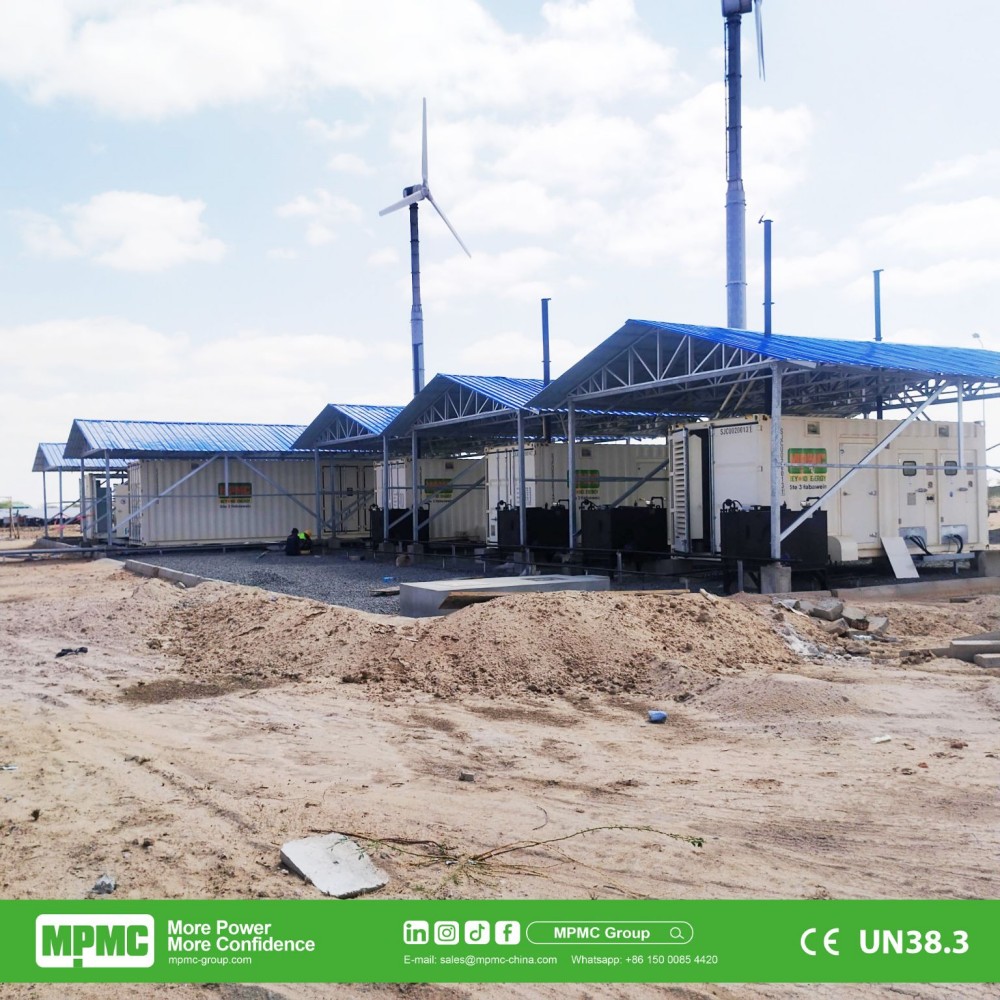
MPMC microgrid project — 1 MW solar with 1 MWh battery storage and diesel generator backup
One Control Layer or an Appointed Integrator
Either one party provides the control layer across all four technologies and carries responsibility for their interaction, or the project appoints an integrator to do it across multiple vendors’ equipment. Both structures work; what does not work is assuming the question has been answered when nobody has been named.
The symptom of an unresolved control layer is familiar: a fault occurs, each supplier demonstrates that its own equipment behaved correctly, and the site remains unfixed while responsibility is discussed. Naming the party accountable for system behaviour in the contract is the single most valuable step in this procurement.
What the Energy Management System Actually Does
The EMS is where a microgrid’s performance is decided. MPMC describes its self-developed EMS as dynamically optimising the energy mix using multi-source data and weather forecasting, with stated objectives of maximising photovoltaic generation efficiency, minimising diesel runtime and maximising storage response flexibility, interfacing with SCADA for automated dispatch, real-time monitoring, alarm management and remote control.
Two decisions inside that logic determine most of the fuel outcome. The state of charge at which a generator starts trades fuel against battery cycling, and whether an engine remains running as a frequency reference even when storage and solar could carry the load trades fuel against stability. Neither has a universally correct answer, and both should be written into the specification rather than left to default settings.
What to Examine in a Candidate Supplier
Area
What to examine
Published MPMC position
Product breadth
Whether all four elements come from one source
Generator sets 800–3,750 kVA; HBD storage; SPK solar plants; self-developed EMS and SCADA
Control ownership
Whether the software is developed or licensed
Self-developed SCADA and EMS with ten-year data retention and an SL3 cybersecurity framework
Control modes
Whether the modes the project needs are supported
PQ, VF, VSG, black start, grid-forming, intelligent dispatch, reactive power regulation
Multi-site experience
Whether a comparable programme has been delivered
Kenyan microgrid programme of 6 MW across four sites
Remote support
How a fault is diagnosed at distance
Remote diagnostics with StarLink satellite backup communication
Warranty across elements
Whether terms differ by product line
Genset 1 year or 1,000 hours; GSB 2 years or 1,500 hours; HBD-A 5 years or 2.2 MWh/kWh
The last row is worth reading carefully, because a single-source package does not mean a single warranty. Terms differ by product line and engine and alternator coverage follows those manufacturers’ own terms, so the claim routes should be mapped even where one company supplies everything.
Protection and System Strength
Protection devices need fault current to discriminate correctly, and a microgrid running predominantly from inverters provides far less of it than one running from rotating machines. Settings carried over from a grid-connected design frequently fail to discriminate on generator fault levels.
The earthing and protection study therefore belongs in the front-end work rather than in commissioning, and the alternator’s short-circuit capability rather than the engine rating governs what is achievable. Where the microgrid must restart from a complete shutdown, black start capability and the restart sequence should both be specified.
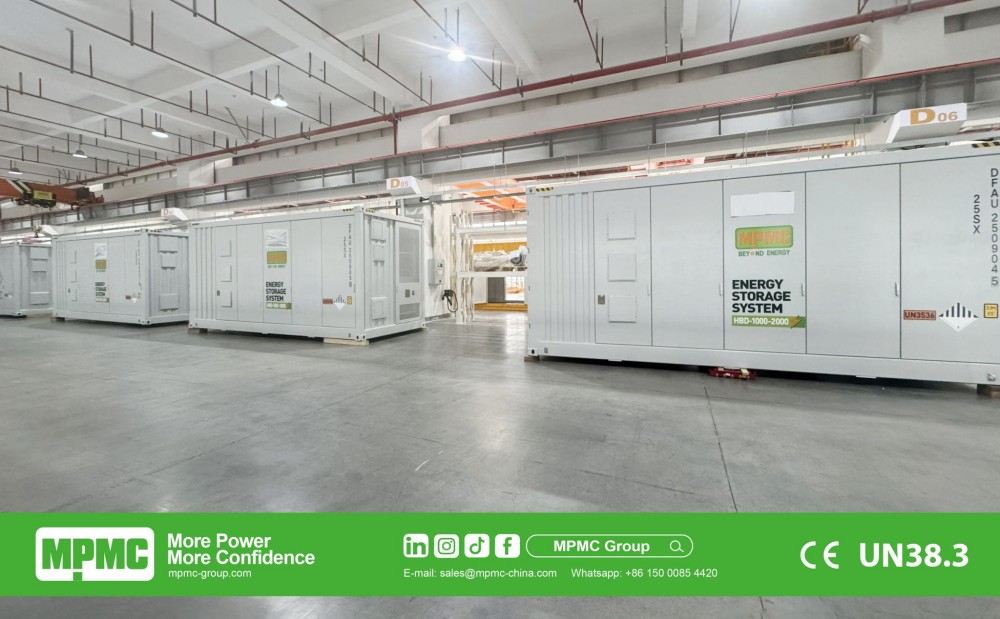
MPMC 8 MWh containerised battery energy storage system
A Documented Multi-Site Programme
MPMC lists a Kenyan microgrid programme of 6 MW across four sites. Each site is described with more than 1 MW of solar generation, at least 1 MWh of DC-coupled battery storage rated at 80% depth of discharge and 6,000 cycles with dual-unit redundancy, and diesel backup of two 500 kW plus two 250 kW units.
Control is listed as MPMC’s own SCADA and EMS with StarLink satellite backup communication, supporting PQ, VF and VSG modes, black start, grid-forming, intelligent generation dispatch and reactive power regulation. The published outcome describes stable round-the-clock operation in a high-ultraviolet, sandy environment with seamless solar-to-diesel switching and minimal on-site staffing. That result belongs to that resource and demand profile.
Commissioning Is Where the Design Is Proved
A microgrid is not demonstrated by the equipment arriving. It is demonstrated by watching the system transfer between sources, ride through a fault, restart after a shutdown and behave sensibly when solar disappears behind cloud during a peak.
MPMC lists commissioning support within its direct-project scope alongside design consultation, product customisation, factory testing and logistics. What should be agreed in the contract is the acceptance test list — which scenarios will be demonstrated, who witnesses them and what happens if one fails — because that list converts a design promise into an obligation.
Comparing Proposals That Are Not Comparable
Microgrid proposals frequently differ in scope rather than in price. One bidder may include the protection study, commissioning attendance and a year of remote monitoring; another may quote equipment alone and price the rest as variations later.
Issuing a scope schedule with the enquiry and requiring every bidder to mark each line as included, excluded or shared converts a set of incomparable documents into a comparison. Comparing what each bidder asked for — load profile, solar resource data, site conditions, required autonomy — is frequently more informative than comparing what each offered.
Microgrid Design Checks
● Decide the structure first: single-source control layer, or a named integrator.
● Name the party accountable for system behaviour in the contract.
● Write down the dispatch hierarchy, including engine start thresholds.
● Decide whether an engine must run continuously as a frequency reference.
● Commission an earthing and protection study for islanded operation specifically.
● Match required control modes against those supported, including black start.
● Agree the acceptance test list, witnesses and the consequence of a failed scenario.
● Issue a scope schedule and require each line to be marked included, excluded or shared.
https://www.mpmc-group.com/
MPMC Powertech Corp. -
AuthorPosts

- You must be logged in to reply to this topic.